
Almost every premature failure we see on built-in refrigeration traces back to something a homeowner could not have known to check. The good news is that the maintenance that matters most takes fifteen minutes twice a year and no tools. Do these few things and a built-in unit will reward you with the long life it was designed for.
Clean the Condenser, Twice a Year
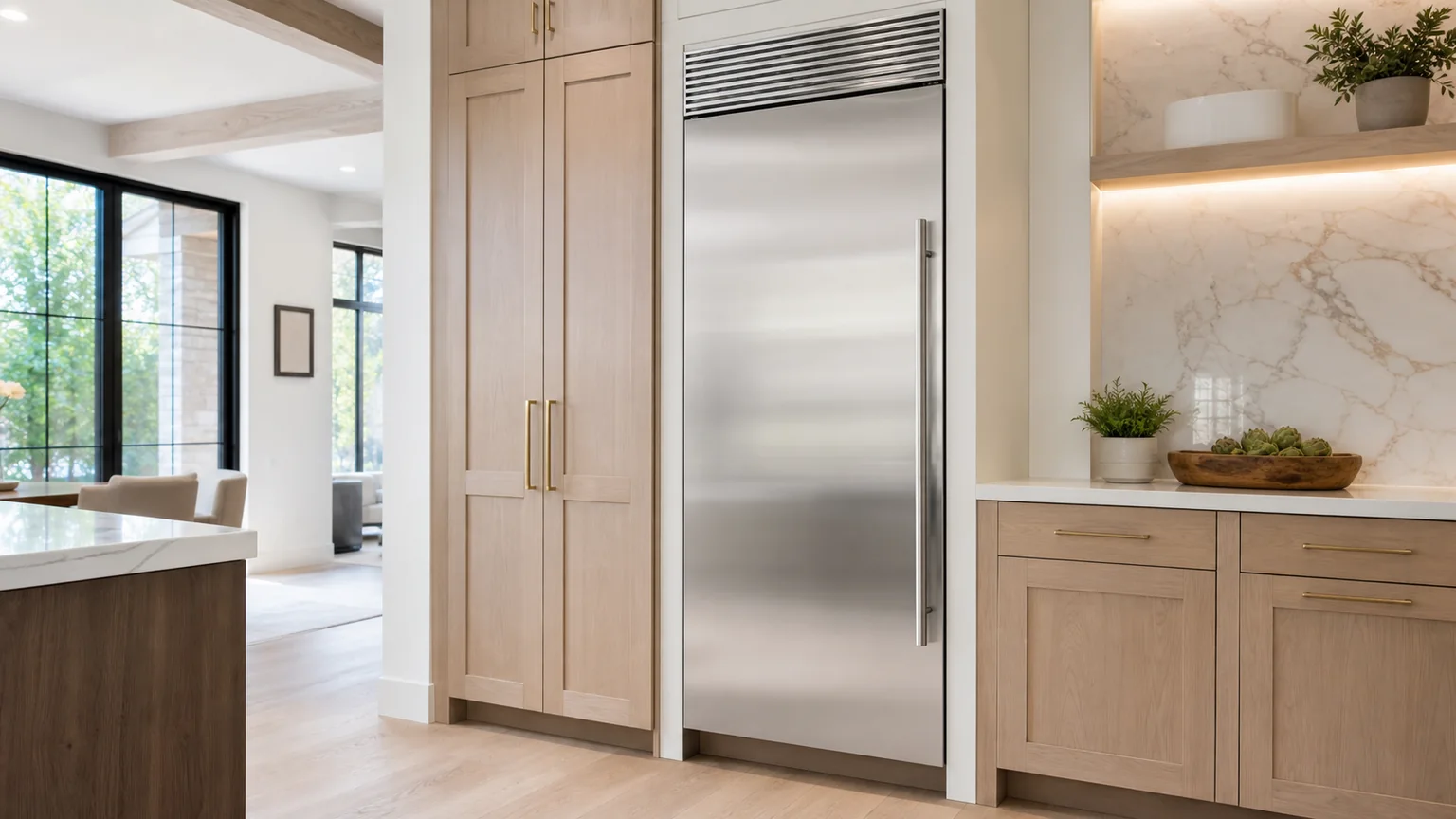
This is the single most important thing you can do. A built-in refrigerator sheds heat through a condenser behind the upper grille. When that condenser packs with dust, pet hair, and Highlands Ranch's seasonal pollen, the compressor runs hotter and longer to hold temperature, which is exactly what wears it out. Pull the grille, vacuum the coil and fan area, and brush out what the vacuum misses. Homes with pets or near open space should do it three times a year.
Watch the Door Gaskets
Dry Front Range air is hard on the magnetic gaskets that seal the doors. When a gasket stiffens or cracks, warm humid air leaks in, the unit works harder, and you get frost and condensation. Wipe the gaskets clean, check the seal with a dollar bill (it should tug when you pull it out of a closed door), and have a failing gasket replaced before it stresses the sealed system.
Give It Room to Breathe and Level It
- Keep the top grille clear. Built-ins vent through the front, so blocked airflow traps heat.
- Do not pack the fresh-food section so tightly that interior air cannot circulate.
- Confirm the unit is level so the doors self-close and drains run correctly.
- If the unit has a water line, change the filter on schedule to protect the valve and dispenser.
| Habit | How Often | What It Prevents |
|---|---|---|
| Vacuum the condenser | 2-3x per year | Compressor overwork and early failure |
| Inspect door gaskets | Twice a year | Frost, condensation, sealed-system stress |
| Replace water filter | Every 6-12 months | Valve scale and weak dispensing |
| Clear the top grille | Ongoing | Trapped heat and long run times |
| Check leveling | Yearly | Doors not sealing, drain backups |
Signs to Stop and Call
Some symptoms should not wait for the next maintenance session. Frost building on the freezer back panel, a compartment that slowly warms, a unit that runs constantly, water pooling under the crispers, or a temperature alarm all point to a component that needs attention. Caught early, these are small repairs. Left alone, they put load on the compressor, which is the one part you never want to replace.
Fridge Running Warm or Frosting Up?
Catch it early and keep the repair small. Book a diagnosis. Diagnostic and travel fees, if applicable, are confirmed before the appointment and before repair approval.